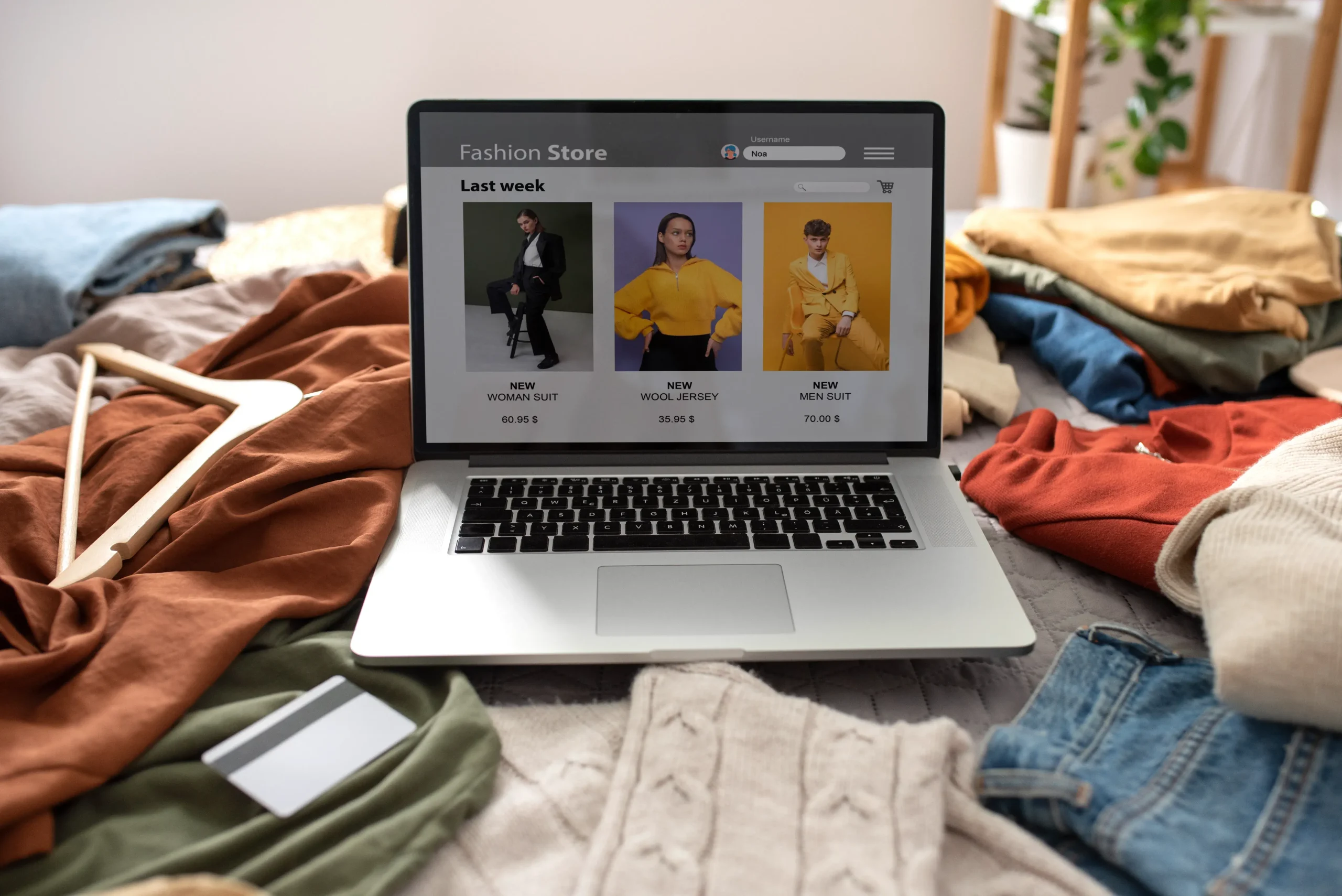
An online clothing store can look great, attract traffic, and still operate at a loss. Why? Because in fashion e-commerce, profits aren’t just eaten up by advertising and competition. Often, the biggest blow comes from returns, weak product listings, clunky filtering, and a poor understanding of how people choose clothes online.
The buyer can’t touch the fabric. Can’t try the item on. Can’t see how the color looks in daylight. That’s why the website must replicate part of the offline store experience: show the fit, explain the sizing, reveal the texture, provide a quick search, and eliminate doubts before ordering.
Developing an online store for a clothing should start not with a beautiful landing page, but with questions that directly impact revenue. How can we reduce returns? How can we speed up the selection process? How can we increase the average order value? How can we ensure that the customer returns not with a complaint, but to place a new order?
Why an online clothing store shouldn’t just be a catalog
Clothing is a complex product to sell online. Two dresses may both be size M, but they can have different fits. One shade of beige looks warm, while another looks gray. An item might fit perfectly on a 5’10” model, but look different on a 5’4″ customer.
If the website doesn’t explain this, the customer is essentially ordering blindly. And then the returns start: the size didn’t fit, the color is different, the fabric isn’t what was expected, or the length is wrong. Every return involves shipping, the manager’s time, reprocessing the item, and a loss of trust.
| Problems in a clothing store | What the website should provide: |
| The customer doesn’t understand the sizing | Size chart, model’s height, fit recommendations |
| The color is different from what they expected | Photos in different lighting conditions, text description of the color |
| The item is hard to find | Filters by size, color, material, season, price |
| The customer is hesitant | Videos, reviews with photos, details on fabric and hardware |
| The average order value is low | Ready-to-wear outfits, clearance sales, free shipping threshold |
| Many abandoned carts | Simple checkout, clear shipping and payment options |
A clothing website shouldn’t just display products. It should help customers make a choice without a fitting room. That’s the difference.

Starting an Online Clothing Store: Where to Begin
Before developing a website, you need to understand the business model. Whether it’s a single-brand store, a multi-brand store, a local manufacturer, a premium clothing brand, a basic mass-market brand, or a showroom with online sales—each model has its own logic.
For a premium clothing brand, history, materials, visual presentation, trust, detailed product descriptions, and a convenient selection of variations are important. For a multi-brand store—powerful filtering, search, categories, stock levels, discounts, and fast order processing. For a manufacturer—the ability to showcase the production process, fabric quality, collections, and sizing details.
At the outset, you need to determine:
- which categories will be the main ones;
- how many products are planned now and in a year;
- whether there are variations in colors and sizes;
- whether multilingual support is needed;
- how delivery will work;
- whether online payment will be available;
- whether integration with CRM, warehouse, or point-of-sale systems is needed;
- which marketing channels will be activated immediately.
Without this, the website often ends up looking “pretty” but is not conducive to sales. And beauty without sales is just an expensive decoration.
Structure of an online clothing store
The structure should be clear to both customers and Google. If all products are lumped into a single general category, it’s hard for customers to make a choice, and it’s hard for search engines to know which pages to promote.
The basic structure can be organized by categories: dresses, sweaters, pants, skirts, coats, suits, and accessories. But that’s not enough. When shopping for clothes, people often search by purpose, season, material, style, or occasion.
| Page Type | Example: | Why is it needed? |
| Category | Dresses, sweaters, pants | Primary commercial demand |
| Subcategory | Midi dresses, cashmere sweaters | More precise selection |
| Collection | Fall-Winter, core collection | Convenient for seasonal launches |
| Material | Cashmere, merino wool, linen, cotton | Works well for informed choices |
| Style | Casual, business, evening | Helps put together a look |
| Blog | How to choose a cashmere sweater | Guides the customer through the selection process |
An important point: there’s no need to create dozens of identical pages. “Women’s sweaters,” “sweaters for women,” “trendy women’s sweaters”—if these all refer to the same product range with nearly identical text, there’s a risk of cannibalization. It’s better to have fewer pages, but with a clear purpose.
Photos and videos: why visuals are more effective than text
In an online clothing store, photos aren’t just window dressing. They’re your main sales tool. Customers make decisions with their eyes, so a single photo on a white background just doesn’t cut it anymore—especially when it comes to premium clothing.
The minimum set for a product listing:
- front view of the garment on a model;
- back and side views;
- close-up of the fabric;
- details of seams, hardware, collar, and cuffs;
- action shot;
- short 10–20-second video;
- photos in daylight or neutral lighting.
Text can explain the composition. But only a photo will show how the fabric drapes on the body. A video is even better. It shows whether the garment stretches, how the skirt moves, whether the sweater bunches up, and how the sleeves fit.
For a premium brand, visuals are especially important. If someone is buying cashmere, they want to feel the quality before making a purchase. That’s difficult to do through a screen. But close-ups of the texture, a well-curated gallery, and a calm presentation help.
Size chart: where profits are lost
Sizing is one of the main reasons for returns. Shoppers are used to their usual S or M, but fits vary from brand to brand. This is especially true for knitwear, cashmere, merino wool, oversized styles, and loose-fitting garments.
Simply writing “S/M/L” isn’t enough. It’s not a size chart—it’s a guessing game.
| What to specify: | Why is this important? |
| Chest, waist, and hip measurements | Customers can compare the measurements to their own body measurements |
| Garment length | Especially important for dresses, coats, and skirts |
| Sleeve length | Helps avoid sizing mistakes |
| Model’s height | Buyers can understand the proportions |
| Size on the model | You can see how a specific size fits |
| Fit details | Oversized, slim fit, loose fit, runs small |
The “How to Choose a Size” section works well. It’s not a lengthy guide, but a brief explanation next to the size selection button. Even better is the size guide: the customer enters their measurements, and the site recommends a size.
We’ve seen how a single phrase like “The model is wearing a size S and is 173 cm tall” clears up more doubts than a long paragraph about fit. Because it’s specific.
Filters and search: don’t make customers scroll through the entire catalog
If a store has more than 200–300 products, filtering becomes essential. If there are 800 or more products, a website without proper filters starts working against sales. A customer wants a black merino wool sweater, size M, within a certain price range. They won’t scroll through 40 pages.
A clothing store needs filters that replicate the real-life selection process.
They must work quickly. Preferably without a full page reload. Click a color, select a size—the catalog updates. That’s it. If the site takes time to process after every click, people start to get annoyed.
Live search for an online clothing store
Smart search isn’t just for large marketplaces. As soon as a customer starts typing “cashmere,” the site immediately displays “cashmere sweater,” “cashmere cardigan,” and “cashmere hat”—complete with thumbnails, prices, and availability.
This shortens the path to the product. And in e-commerce, every extra step is a risk of losing an order.
But search must account for typos and different phrasing. A user might type “sweater,” “jumper,” or “cardigan”—and expect similar products. If the search is too literal, it’s useless.
Product Card: What Should Be Included
A product page on an online clothing store should answer almost all questions before a customer needs to contact a manager. Otherwise, managers will find themselves repeating the same answers every day: “What’s the fabric?”, “Is it available in other colors?”, “Does it run small?”, “When will it ship?”
The structure of a strong product page:
- product name without unnecessary fluff;
- price and availability;
- size and color options;
- clear image gallery;
- fabric composition;
- fit description;
- size chart;
- shipping and return policies;
- care instructions;
- reviews;
- similar products or a complete outfit.
Shipping, Payment, and Returns: The More Transparent, the Greater the Trust
When it comes to clothing, shipping and returns influence purchasing decisions almost as much as price. Customers want to know: when their order will be shipped, whether they can pay online, how to choose a Nova Poshta branch, and what to do if the size doesn’t fit.
Don’t bury this information deep within your website. A brief section on the product page and a separate page with terms and conditions are the bare minimum.
What to include:
- shipping methods;
- shipping times;
- free shipping conditions;
- online payment;
- cash on delivery, if available;
- exchange and return policies;
- who pays for return shipping;
- how to process a return.
If your store operates throughout Ukraine, the Nova Poshta module—which lets customers choose a branch—makes the ordering process much easier. But you need to set it up properly: take into account package dimensions, branch locations, parcel lockers, and keep the branch list up to date. Otherwise, even though the module is there, customers will still end up contacting your manager.

My Account and Repeat Purchases
A personal account on a clothing store’s website is useful for more than just order history. It helps bring customers back—especially if the brand sells collections, runs loyalty programs, offers personalized discounts, or encourages repeat purchases.
The account can store:
- order history;
- favorite items;
- saved sizes;
- shipping addresses;
- bonuses;
- order statuses;
- personalized offers.
For a premium brand, the account dashboard should be calm and uncluttered. No aggressive pop-ups, unnecessary banners, or visual clutter. People aren’t just buying a product—they’re buying the experience of the service.
Promoting an online clothing store
SEO-promotion for an online clothing store cannot be based solely on search terms like “buy a dress” or “buy a sweater.” Competition is fierce in those areas—with major marketplaces, well-known brands, and aggregators. It’s possible to compete, but it’s expensive.
Long-tail keywords often work better: “buy women’s cashmere sweater,” “merino wool knit cardigan,” “black midi dress with long sleeves,” “warm women’s oversized sweater.” These queries have lower search volume but higher purchase intent.
The SEO structure should include:
- categories;
- subcategories;
- collection pages;
- product description pages;
- product detail pages;
- blog posts;
- FAQ on sizing, care, and shipping;
- internal linking.
Contextual advertising and Google Shopping help drive sales faster. Instagram and email marketing are effective for visual engagement and follow-up interactions. But all these channels are useless if your website is user-unfriendly. Advertising will bring people in, but a poor product listing will drive them away.

Technical infrastructure of an online clothing store
A clothing store quickly becomes a heavy-loading site. Lots of products, 5–8 photos per item, videos, filters, variations, search, reviews, a personal account, payment, and shipping.
And a slow website in fashion retail means lost orders. A customer is browsing the catalog on their phone, photos take forever to load, filters freeze up. That’s it. They’re gone.
What you need to consider:
- image optimization;
- WebP;
- lazy loading;
- caching;
- fast hosting;
- CDN for images;
- proper filter functionality;
- form protection;
- backups;
- analytics for orders and abandoned carts.
For a large catalog, the admin panel is also crucial. It should be easy for the content manager to add sizes, colors, photos, stock levels, materials, and care instructions. If it takes 30–40 minutes to manually enter information for each product, the catalog will be updated slowly. In the fashion industry, this is risky: collections have a short shelf life.
A profitable online clothing store is more than just a beautiful catalog. It’s a system where every detail influences the order: photos, videos, sizes, filters, search, variations, reviews, shipping, payment, upsells, and loading speed.
Proper development of an online clothing store should reduce the number of returns, help the buyer choose an item without trying it on, and make the checkout process simple. And promoting an online clothing store works better when the site is ready to handle traffic: pages are structured, product listings are complete, filters are user-friendly, and the customer understands exactly what they’re buying.
At Estetic Web Design, we view fashion e-commerce not as a showcase, but as a practical sales tool. If a website helps a customer see a product, understand the sizing, trust the brand, and place an order quickly—it works. If it merely displays products—it loses money.
A store with poor photos, a weak size chart, and an inconvenient filter will see orders returned. A store with well-designed product pages, fast search, clear shipping information, and strong visual presentation will sell. The difference between them isn’t about aesthetics. It’s in the details that directly impact profitability.
Leave a Reply